Leak and flood drying · Austin, Texas
Water damage restoration for Austin homes
We pull out standing water, remove what can’t be dried, and use air movers and dehumidifiers to dry your house, keeping the equipment in place until moisture readings show it’s dry. You get photos and room-by-room moisture readings to give your insurance adjuster.
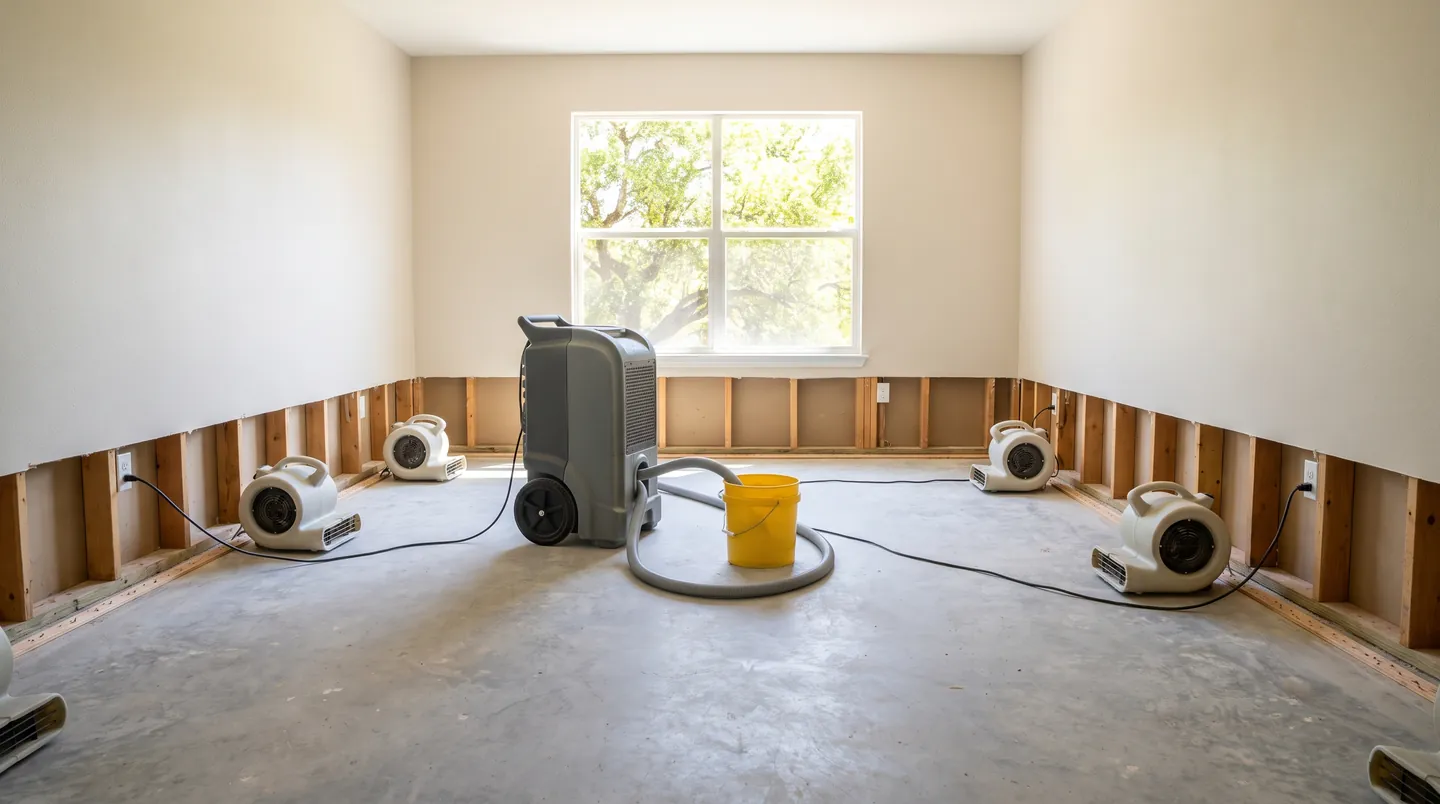
How the drying goes
- 01Find where it went
- 02Pull the water
- 03Open what won’t dry
- 04Dry and measure
- 05Put it back
What happened
Start with what happened
Where the water came from shapes your first steps and our drying work, so if you’re unsure of the cause, start with the first 48 hours.
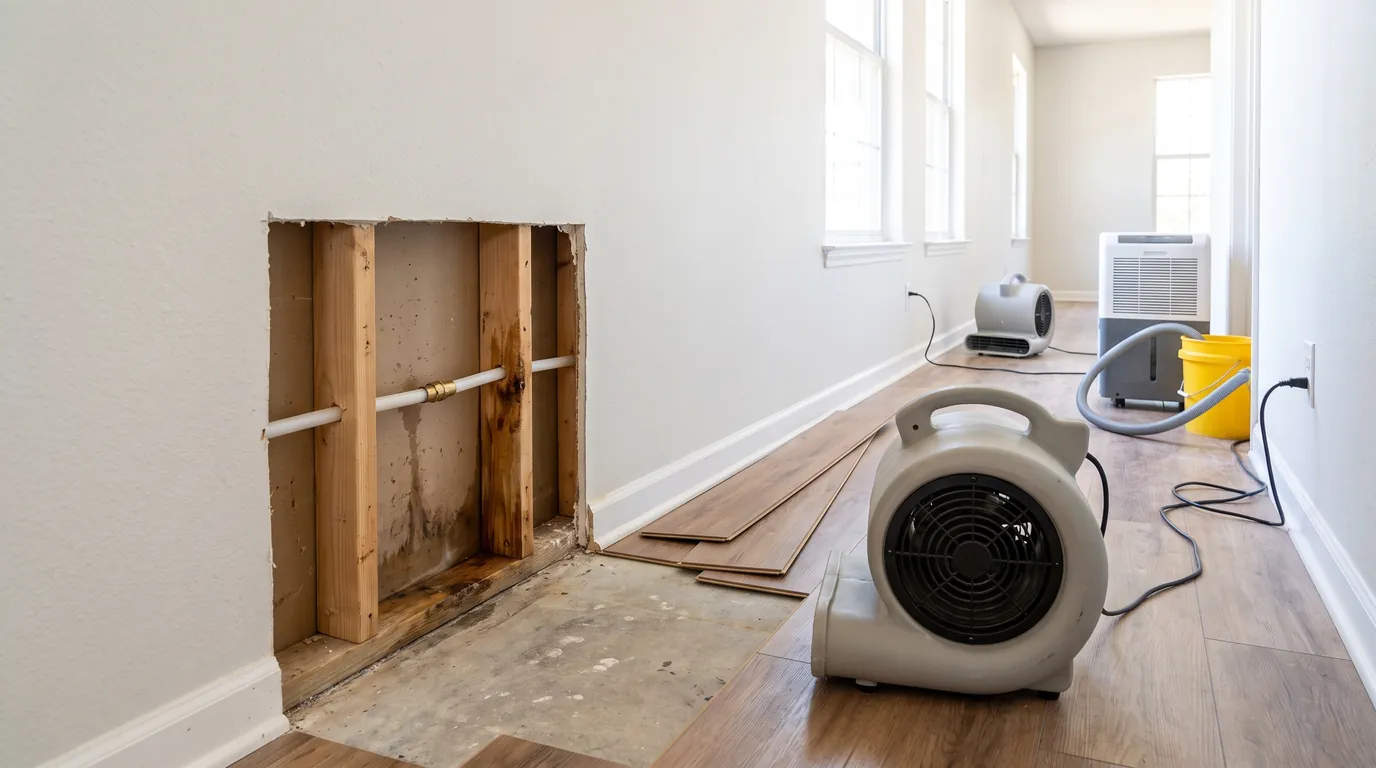
Burst or frozen pipe
Find where to shut off a split line and how we trace water under walls and flooring on a slab.
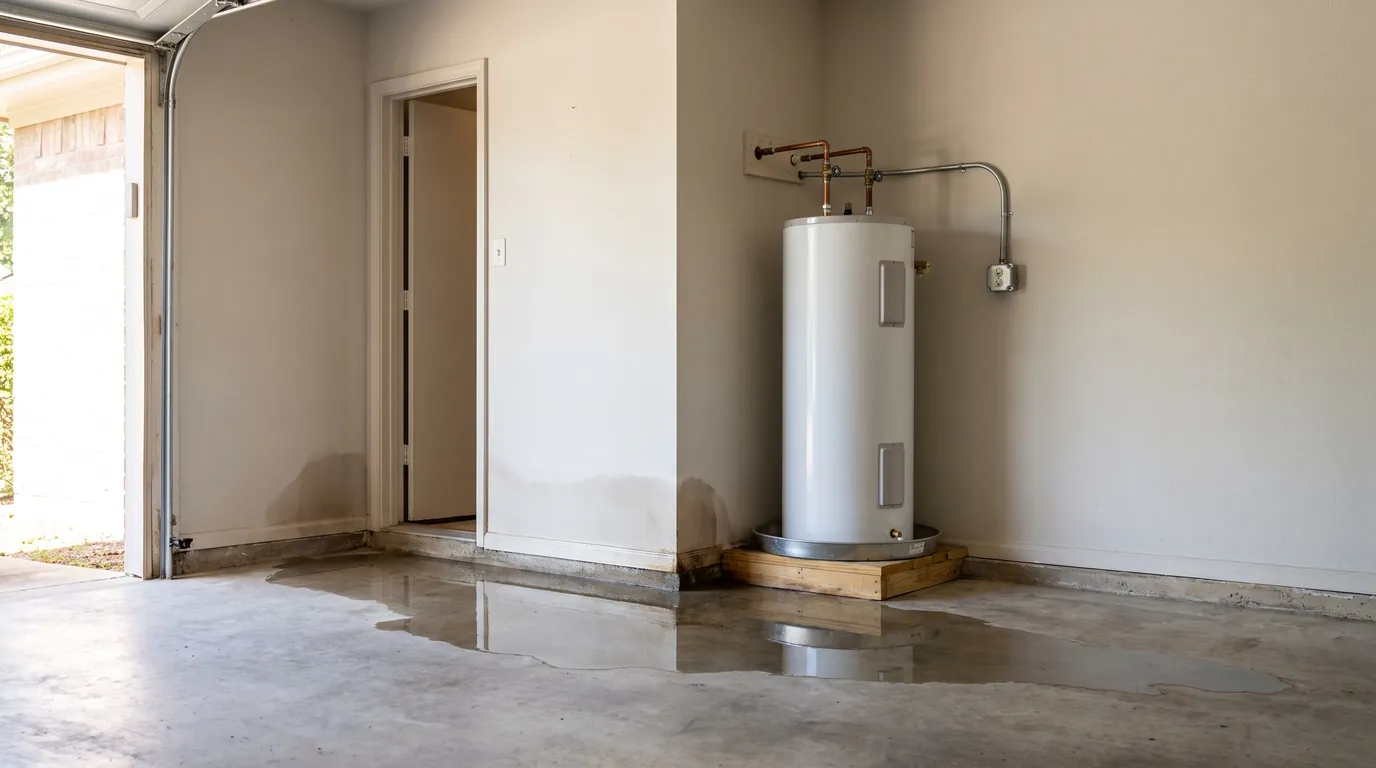
Water heater leak
For garage, closet, or attic tanks, where the leak starts tells you whether the tank is done.
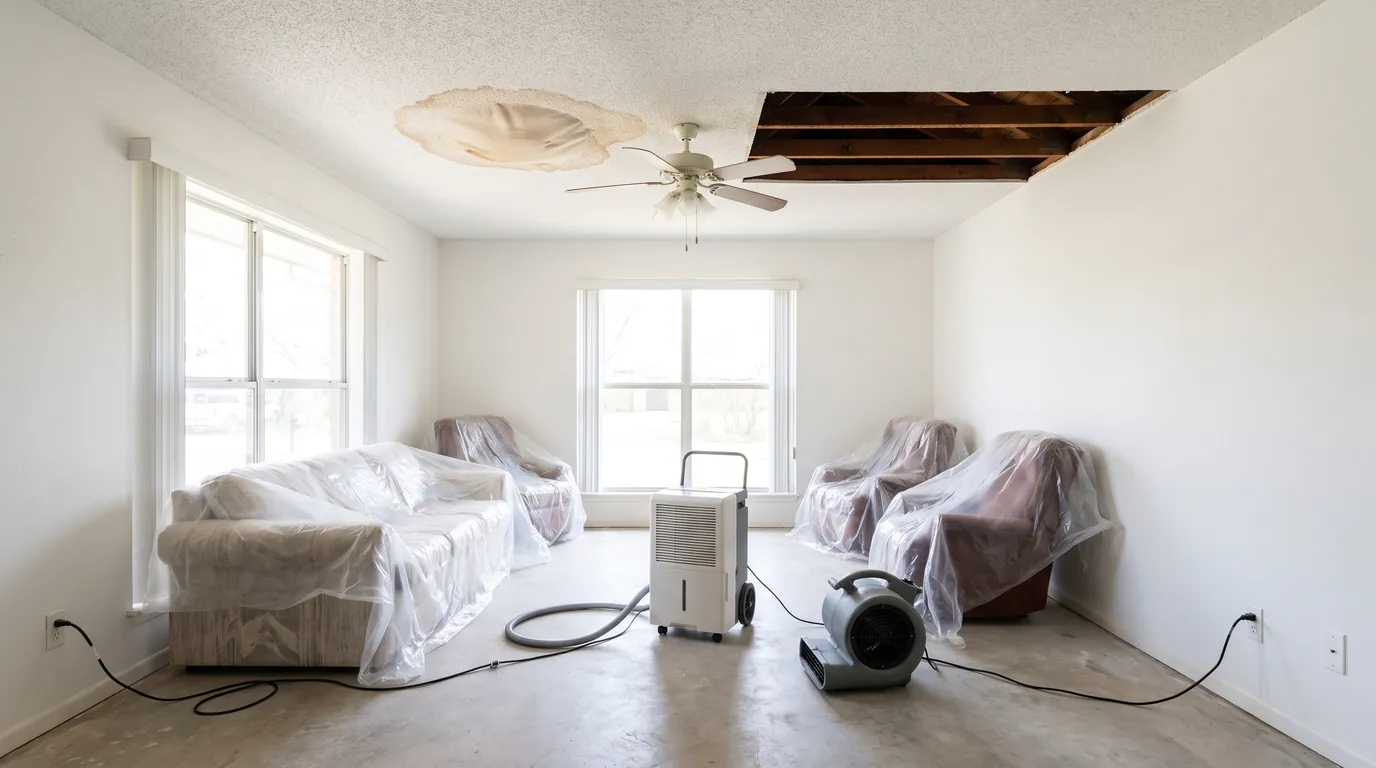
Ceiling stain or roof leak
A brown stain or sagging ceiling means water from the roof, an AC unit, or a pipe above. We dry the attic side and the ceiling.
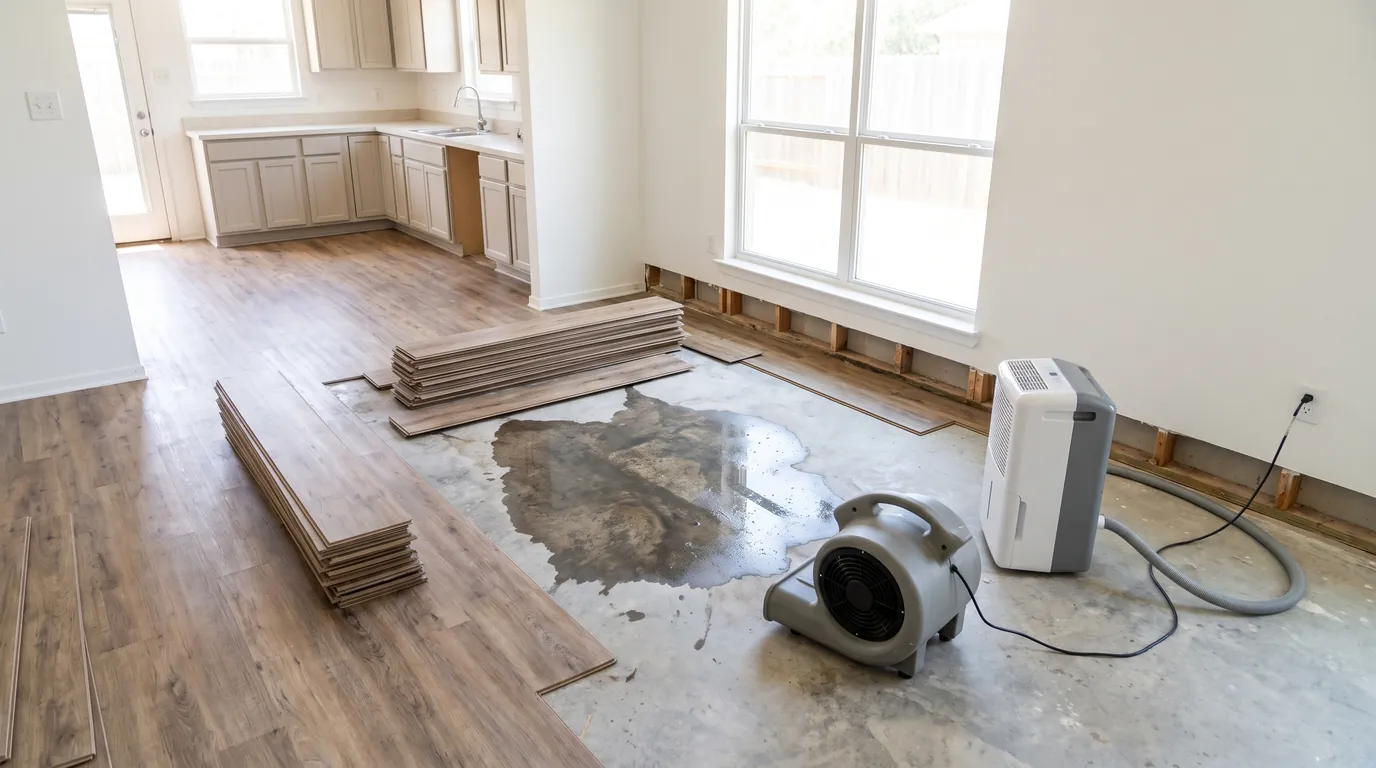
Slab leak
Once a plumber finds and fixes the under-slab line, we dry the slab and walls so the floor can go back down.
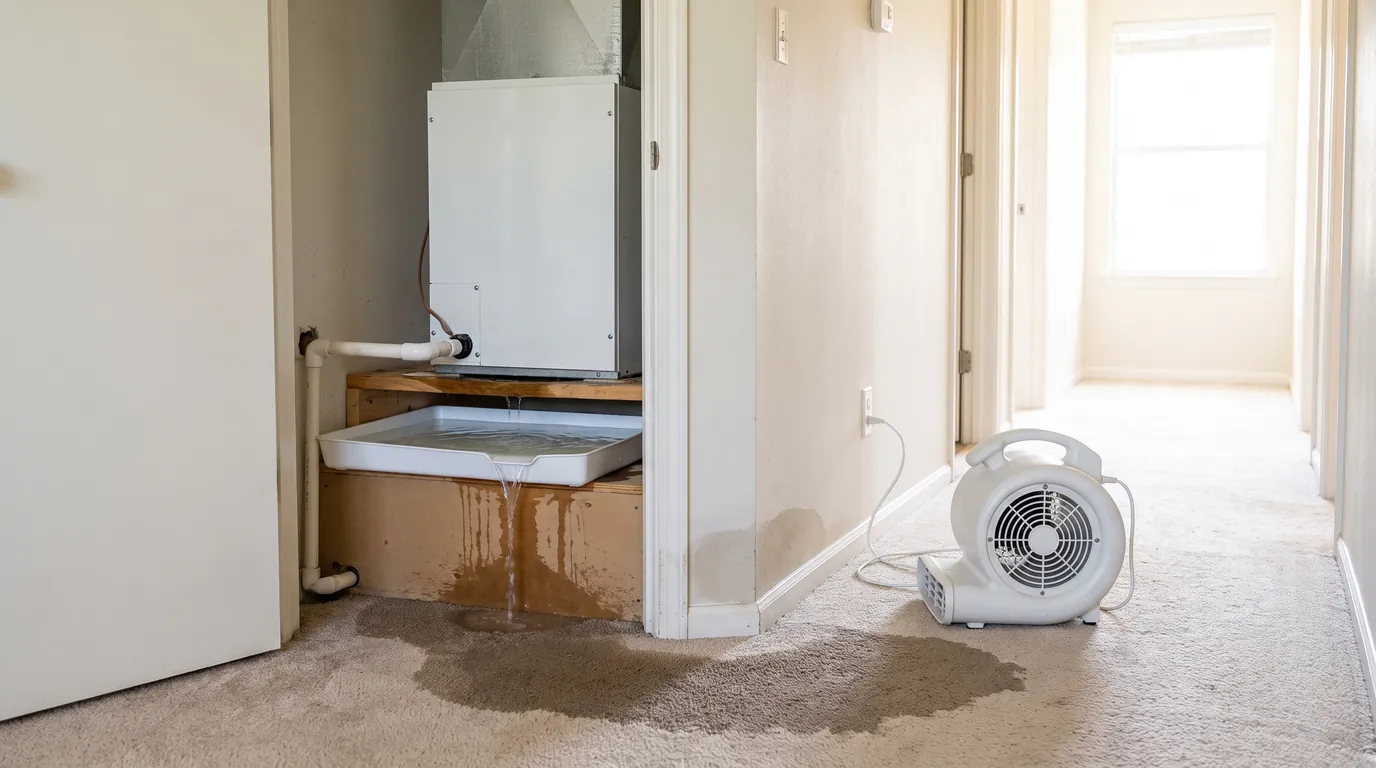
AC leaking water
A clogged AC drain line or overflowing pan can put water in hall carpet or the ceiling under an attic unit.
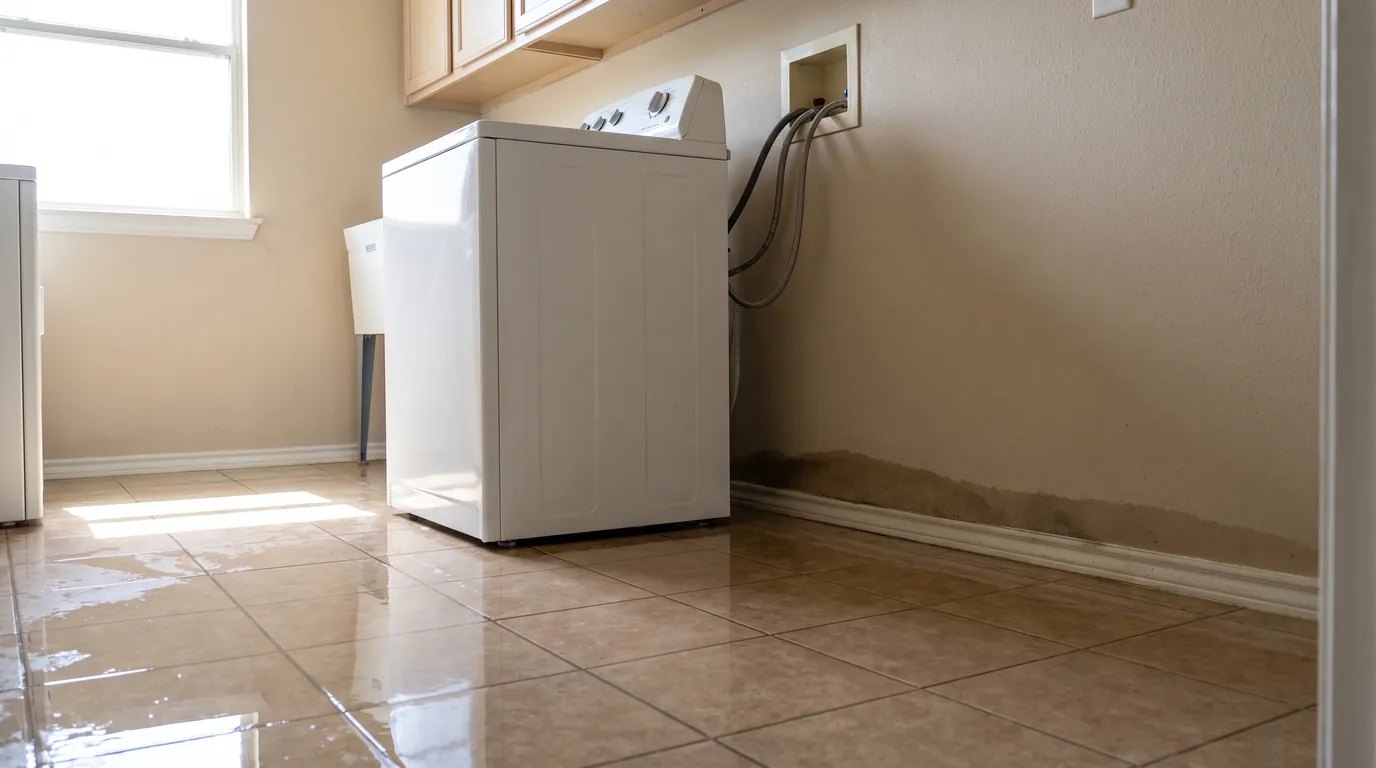
Washer, dishwasher, or fridge
When a hose or supply line lets go, water hides under cabinets, toe-kicks, and floating floors.
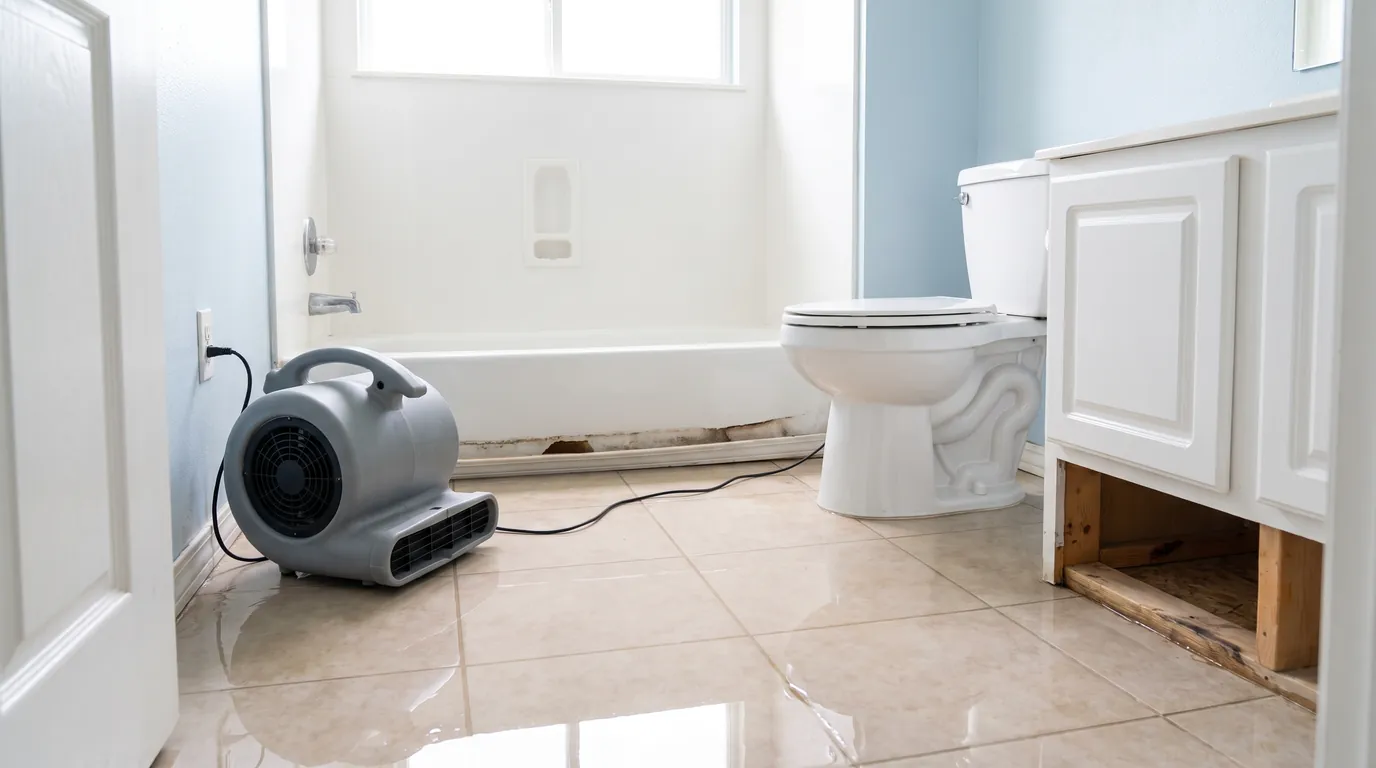
Toilet or supply line
We handle clean supply water and bowl water differently after a burst supply line or overflowing bowl.
Heavy rain and sewer backup
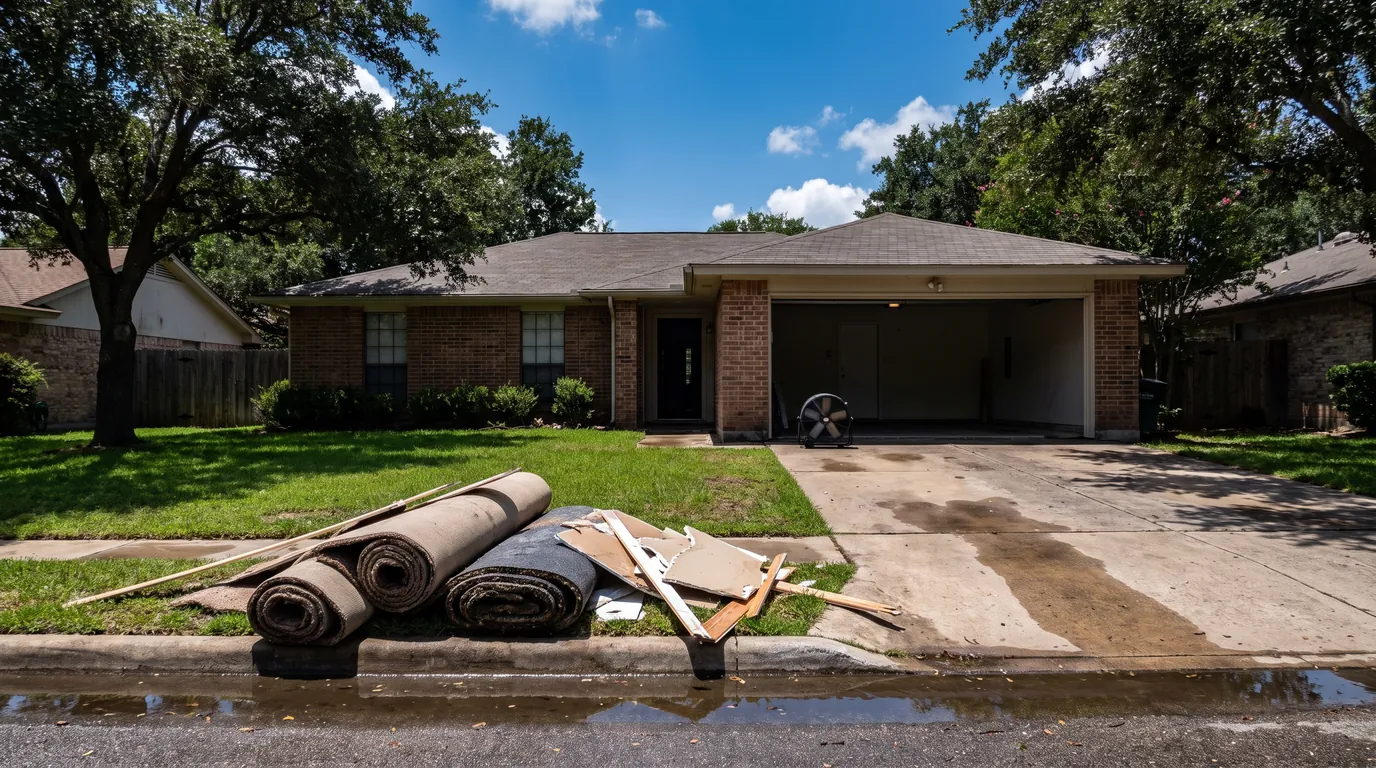
Rain gets in as surface water under doors and through walls, or as sewage pushed back up through the lowest drains.
The work
How we dry out a house
Whatever the water came from, every house dries the same way.
- Wet
- Drying
- Dry
- 01
Find where it went
We walk every room with a moisture meter and mark the wet edges on walls and floors. We take photos before anything moves.
- 02
Pull the water
Extractors pull standing water off carpet, tile, and wood floors. The sooner it’s out, the less water soaks into the walls.
- 03
Open what won’t dry
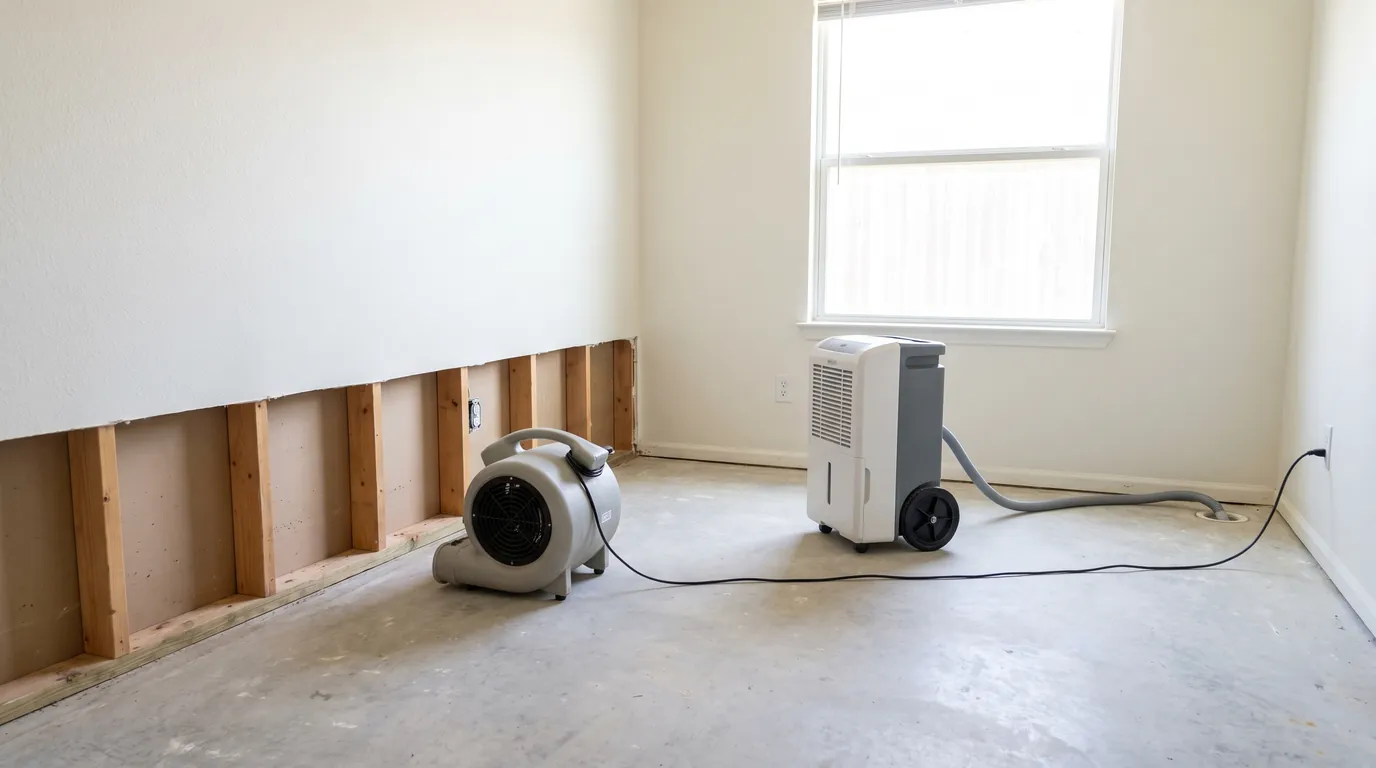
We remove wet carpet pad, baseboards, and wet insulation, then cut wet drywall in a straight line just above the waterline. Floodwater or sewage means more comes out.
- 04
Dry and measure
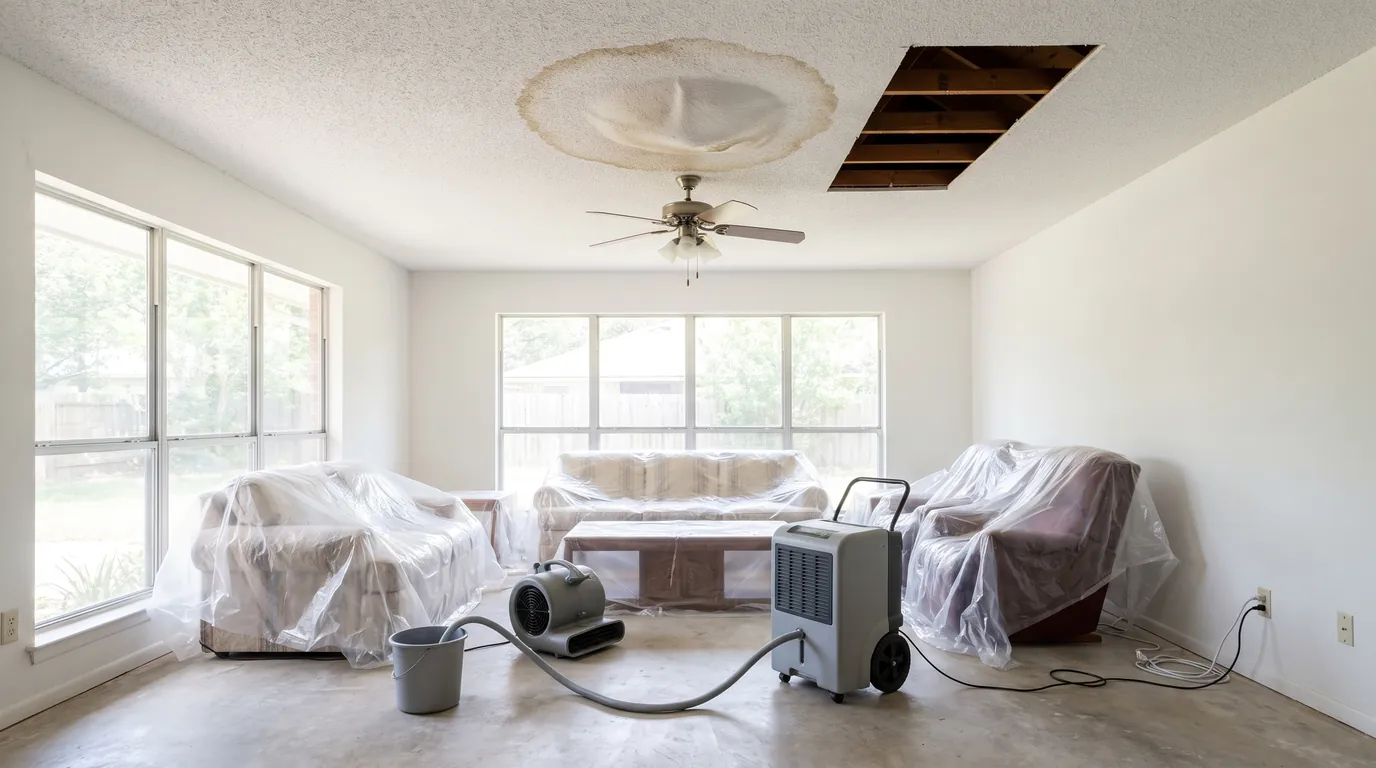
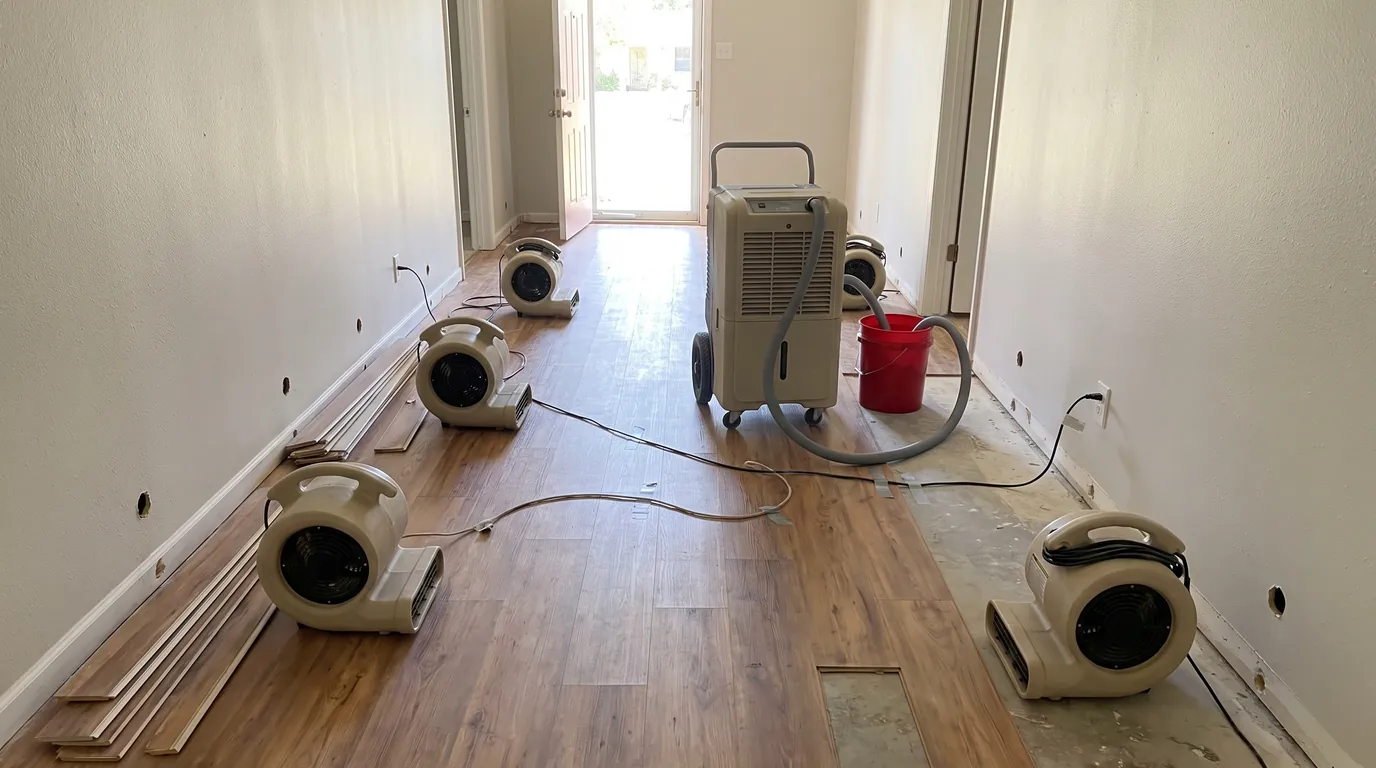
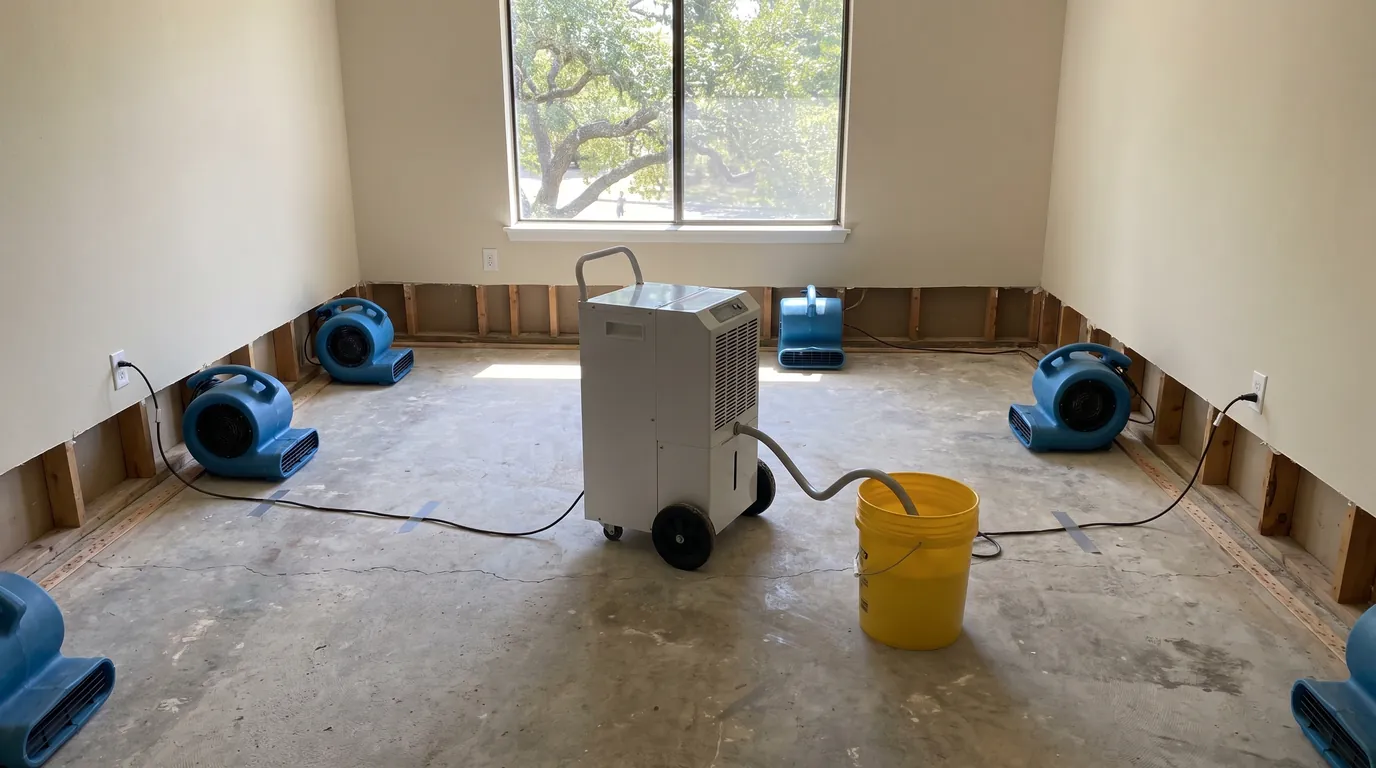
We run air movers and dehumidifiers while taking readings every day. The equipment comes out when walls and floors read the same as a dry room in the house.
- 05
Put it back
We hang and finish new drywall, install insulation and baseboards, and paint. Or we hand the open walls to your own contractor.
Insurance
If you’re filing a claim
We document the damage as we go with photos, moisture readings by room, and a list of what we removed and why. When the adjuster visits, we have the readings and photos ready to walk through. The claim itself stays between you and your insurance company.
The Texas Department of Insurance says most home policies cover sudden and accidental water damage, such as a burst pipe or a toilet overflow, and usually don’t cover gradual leaks. You can read more about what Texas homeowners policies cover. Keep damaged items until the adjuster has seen them, and take photos before anything gets thrown out.
Guides
Guides for the first week
Get plain answers to the questions homeowners ask in the first days after water damage, with sources named for the facts.
The first 48 hours after water damage
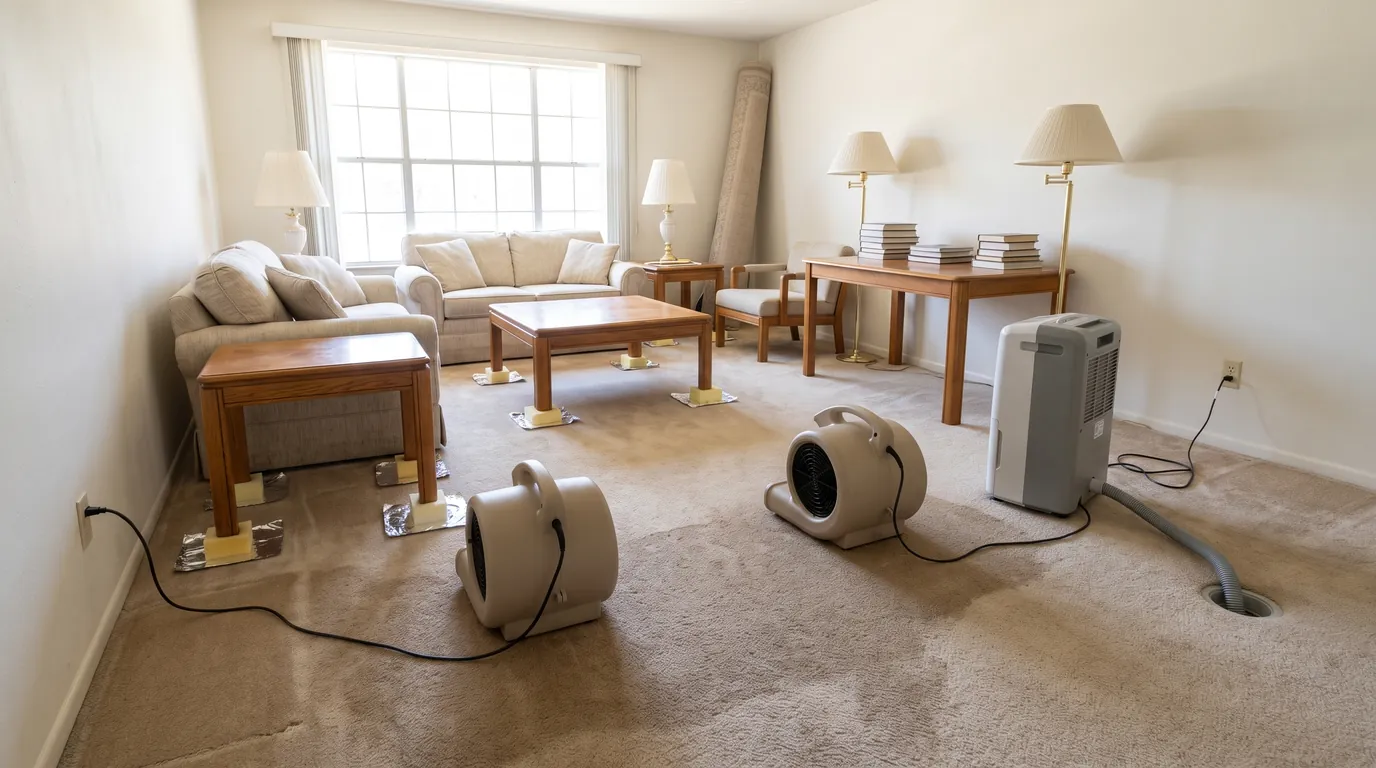
Learn what to do about power and the water shutoff, what to photograph, and what to pull up before the floor soaks in.
Category 1, 2, and 3 water
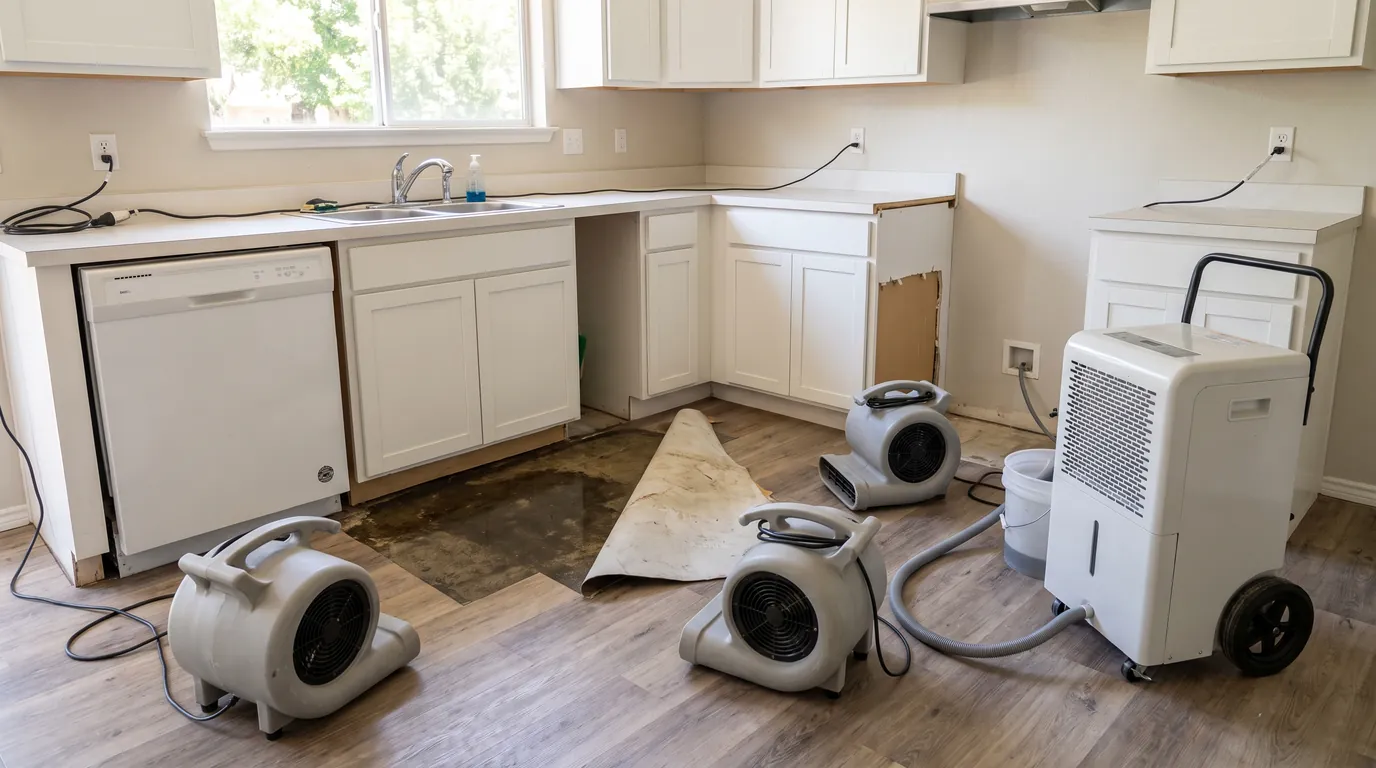
Understand clean, gray, and black water, and how clean water gets dirtier over time.
Does wet drywall need to be replaced?
Find out when wet drywall can stay, when it has to go, and how long drying takes.
Does homeowners insurance cover water damage in Texas?
See what the Texas Department of Insurance says about sudden versus gradual leaks, flood policies, and sewer backup coverage.
What water damage restoration costs
Compare published 2026 ranges from Angi, HomeGuide, Fixr, and others, including figures for Austin.
Why heavy rain backs up sewers
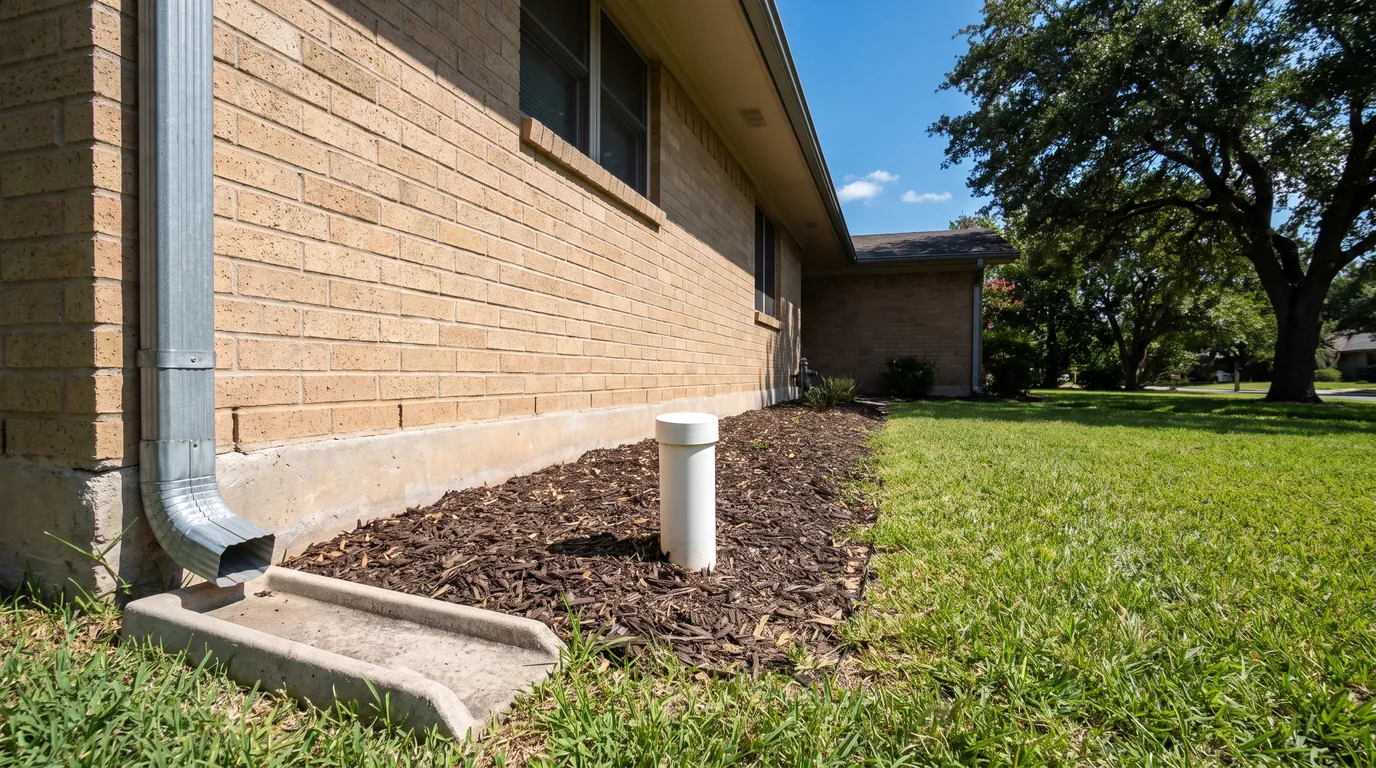
Learn how storm water overloads the sewer, who to call in Austin, and what backwater valves do.
Service area
Where we work
We work in homes across Austin and the towns around it. We cover Travis County first, plus parts of Williamson and Hays counties. You can find the list of towns at where we work.

Questions we hear on the first call
Do you fix the leak too?
No. A plumber fixes pipes, water heaters, slab leaks, and supply lines, while a roofer fixes the roof and an HVAC tech fixes the AC drain. We work around their schedule and start drying once the source is stopped.
How do you know when the house is dry?
We compare the wet areas with moisture readings from a room the water never reached, using that room as the dry target for the same materials. We take readings every day and write them down by room. We remove the equipment when the wet areas match that target.
Will the wet carpet have to come out?
It depends on the water, so start with Category 1, 2, and 3 water. Carpet soaked with clean water from a supply line can often be dried, though the pad usually gets replaced. The CDC says carpet and padding touched by floodwater or sewage should be thrown away.
Will you meet my insurance adjuster?
Yes, we’ll meet with your insurance adjuster if you want us there. We’ll walk the adjuster through the photos and daily readings. What your policy pays is between you and your insurer.
What should I do while I wait?
Shut off the water at the main. The CDC says to turn off power at the main breaker only if you can reach it from a dry spot and to call an electrician otherwise. Move what you can off wet floors, take photos, and read about the first 48 hours.